

The Netherlands is regarded by many as the cycling capital of the world. But did you know this wasn’t always the way? The film Together We Cycle charts the events and culture shifts that led to a revival of Dutch cycling culture, from the 1970s to today. We screened it at our latest Our Planet Our Future event and were joined by Rona Wightman from the St Albans Cycle Campaign to speak about their work to make the St Albans District more cycling-friendly.
From motornormativity to bike-friendly
Like so many cities across the world, Amsterdam’s post-war rebuild centred around the car. The car was the future, architects and developers reasoned, and cities needed to be designed so it could have centre stage. What planners hadn’t accounted for was that more traffic led to a horrific increase in child motor deaths and injuries, which provoked furore. Galvanised by the support of a journalist whose child was fatally injured, a movement to claim back the streets for bikes and pedestrians was sparked. The film showed how scepticism and motornormative attitudes were proved wrong as cities were redeveloped to become more amenable – and cycling took off!
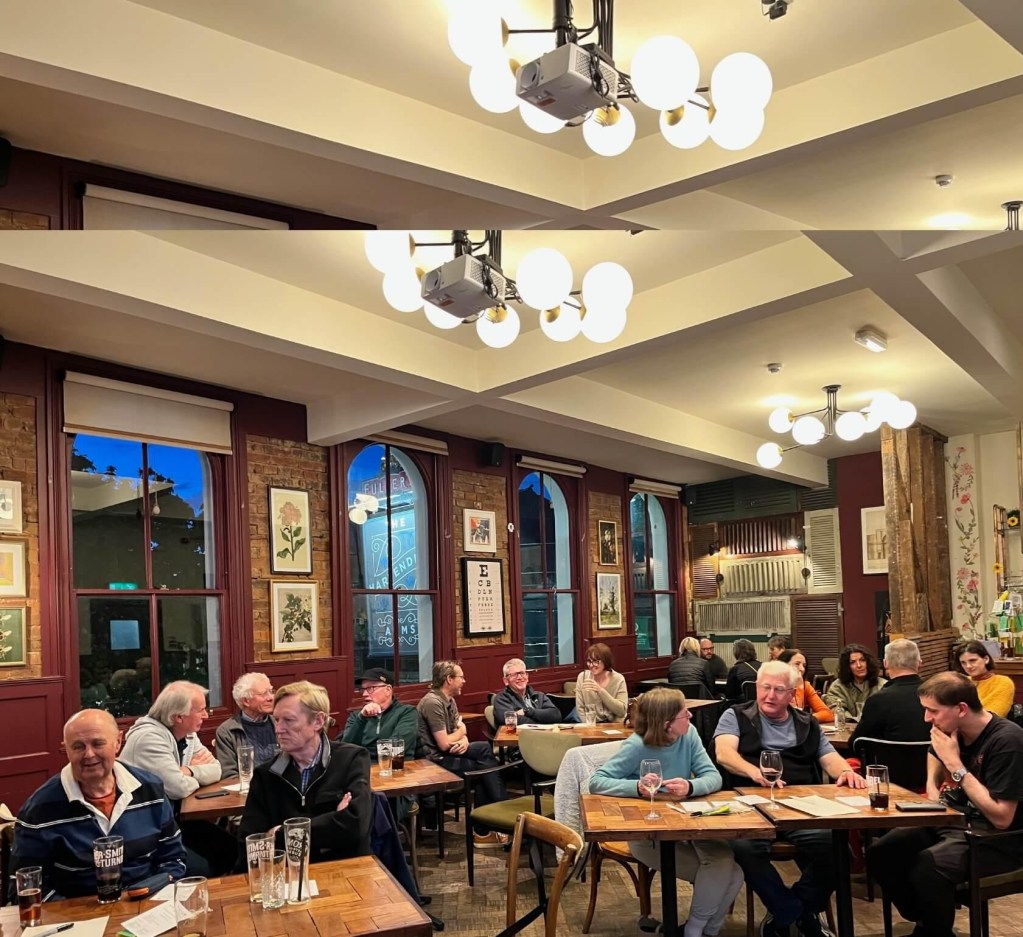
After watching the film, which you can stream for free here, we discussed what surprised us, our own cycling experiences, and what we can do to improve cycling in the district.
Barriers to cycling
Many, but not all, attendees were cyclists of various frequencies and abilities, so we shared a varied perspective on cycling in the district. While some reported mostly positive experiences, others, notably women, reported negative experiences at the hands of irate drivers. Other reasons for not taking the bike as often as we’d like included uneven surfaces, poor lighting, discontinuous cycle paths, and security fears.
We agreed that cycling needs to be, and be perceived to be, more convenient than using a car, but that we’re a long way from this. Other ideas in the room were better cycle parking provision, homes with spaces for cycles, banning cars from streets with schools and avoiding cycle give-ways on side roads.
Campaigning for the future
Rona Wightman from the St Albans Cycle Campaign highlighted local campaigning efforts. She shared that 60-80% of residents don’t cycle because of the aforementioned fears. They want people to have the freedom to choose active travel (walking and cycling) and feel that, if concerns are addressed, many people would then choose to cycle journeys of less than five miles. Better cycle paths and a coherent network of routes, lower speed limits and promoting cycling are ways to achieve this. Wightman shared that the campaign has been successful in getting Hertfordshire County Council to improve upkeep of the cycle paths, most notably removing leaf mulch and trimming verges on the shared path alongside the A1081. St Albans District Council has also got much better at maintaining greenspace routes.
How you can make a difference
Wightman’s talk, along with our discussion, gave us some great ideas on actions we can take ourselves for more enjoyable cycling:
- Opt to walk or cycle for short journeys (under five miles). It doesn’t have to be all journeys – replacing one you’d usually drive is a start!
- If you lack cycling confidence, take a look at Bikeability’s courses. They have offerings for both adults and children.
- If you have to take the rail replacement service don’t think you have to leave your bike at home! Bus rail replacements now carry bikes.
- Let Hertfordshire County Council know how they can make the roads safer for cyclists by supporting the new draft of its road safety strategy by the 22nd of June. The draft really prioritises active travel safety concerns, while recognising that feeling unsafe is a problem so it is well worth supporting.
- When responding to any development planning applications or consultations, look at the cycling provision and lobby to ensure good provision.
- Follow Hertfordshire’s programme to introduce 20mph zones in towns and villages. A recent 20 mph traffic order was consulted on in St Albans. Whenever the St Albans Cycle Campaign speaks to officers, they always say ‘report it’.
- Plan your cycling journey using a journey planner – available on cycle.travel, Cyclestreets or the St Albans District Council website.
- Explore the Harpenden Green Loop, which was launched by Harpenden Town Council on the 18th of May.
Our next event
At our next event, we’ll head to Harpenden’s much-loved Nickey Line for a walk led by Friends of the Nickey Line. Tickets are limited and going fast, so book your free spot here. The walk takes place on Monday 13 July 2026 7.30-9pm.
About Our Planet Our Future
Our Planet Our Future is Sustainable St Alban’s landmark series of talks and events to help you live a more sustainable life.