

Here in Hertfordshire, we’re lucky to have rare chalk streams right on our doorstep. This globally scarce habitat is found mostly in the UK, with 10% feeding into the Rivers Ver and Lea. But many of us are unaware of their importance and history.
At our event on the 9th of March, local experts, volunteers and curious residents came together at the Harpenden Arms to find out more. With a packed room, the evening highlighted the challenges facing these waterways and how we can all help safeguard them.
Let us (re)introduce the water vole
Josh Kalms, Water Vole Conservation Officer at the Herts and Middlesex Wildlife Trust, introduced us to one of the chalk stream’s arguably cutest residents, the water vole. Often mistaken for rats, you can identify them by their round noses, smaller ears and distinctive ‘plop’ as they dive into the water.
But they’re more than just a pretty face. They create connected communities along the riverbanks to share genes, communicate by scent marking and wisely store food for winter. But their most genius invention? They keep their nests warm and cosy all winter long by composting. Who needs an air source heat pump?!

Once widespread across the UK, numbers are now in serious decline. Although you could never accuse the water vole of fussy eating (they eat over 200 plants!) habitat loss means less vegetation along the riverbanks. Add extreme weather events, and a particularly aggressive predator in the form of the invasive non-native American mink, and it’s not hard to see why they’ve been struggling.
The trust and other organisations have reintroduced the water vole back to the Rivers Lea , Ver , Beane, Bulbourn (Boxmoor Trust) and Stort. Find out how you can get involved at the end of this blog.
Chalk streams under pressure
John Pritchard, Chairman of the Ver Valley Society, started with a tribute to the society on its 50th anniversary. The River Ver springs in Kensworth, before flowing through Flamstead, Rebourn and St Albans. It ends at Bricket Wood.
Fed by chalk groundwater, chalk streams are clean and nourish the ecosystem. The water begins as rain over the Dunstable Downs, which soaks into chalk aquifers. It takes two months for the rain to reach the groundwater level, during which it soaks through different types of mineral-rich chalk.
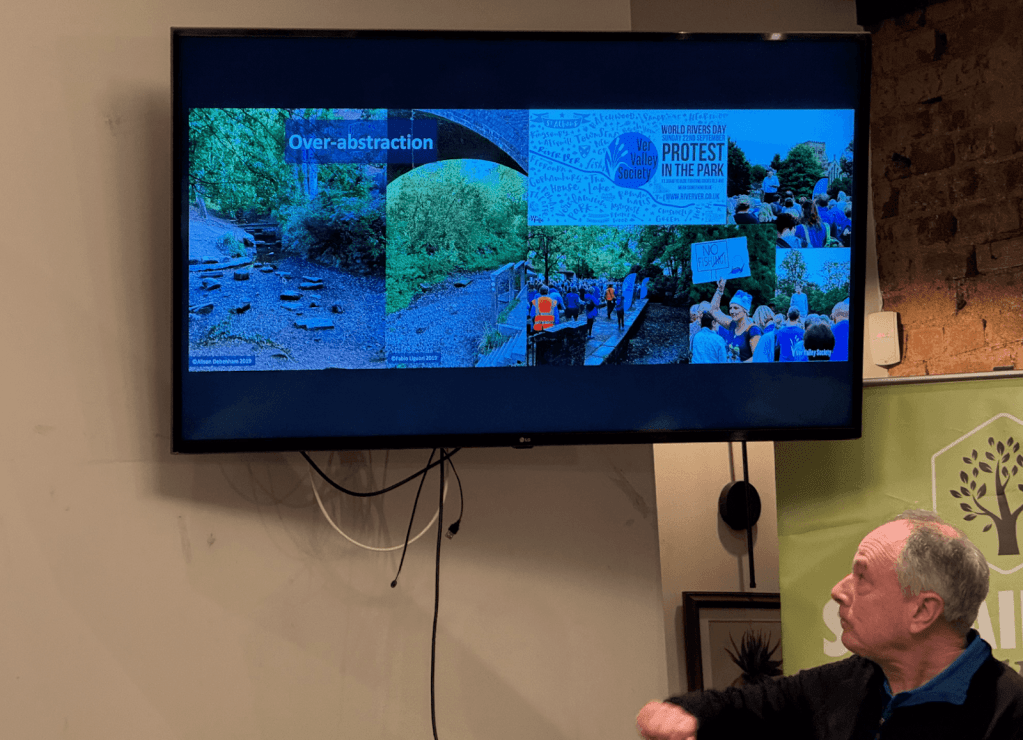
However, our chalk streams also supply most of Hertfordshire’s drinking water, putting them at risk of over-abstraction. Water companies extract millions of litres of groundwater each day which ultimately reduces the vitality of our rivers. In the past, some streams have dried out entirely. Abstraction levels are reducing, but they’re still not sustainable.
Pollution is another significant issue. John reported that it’s not just sewage but also road runoff that’s reducing water quality. However, volunteer river wardens collect data and monitor flow and test pollution levels. Over the years, the Ver Valley Society has built up a lot of data to help advocate for better protection. The society is proud to have been passionate, determined and independent since 1976. Find out how to volunteer below.
Telling the story of Hertfordshire’s chalk streams
Fran Crowther, Development Manager of Not Bourne Yesterday, introduced us to the Chilterns National Landscape’s latest programme. Not Bourne Yesterday aims to help local communities rediscover their chalk streams. The programme title plays on the word ‘bourne’, meaning ‘small stream’ to highlight the chalk streams’ historical importance since at least the Roman times.
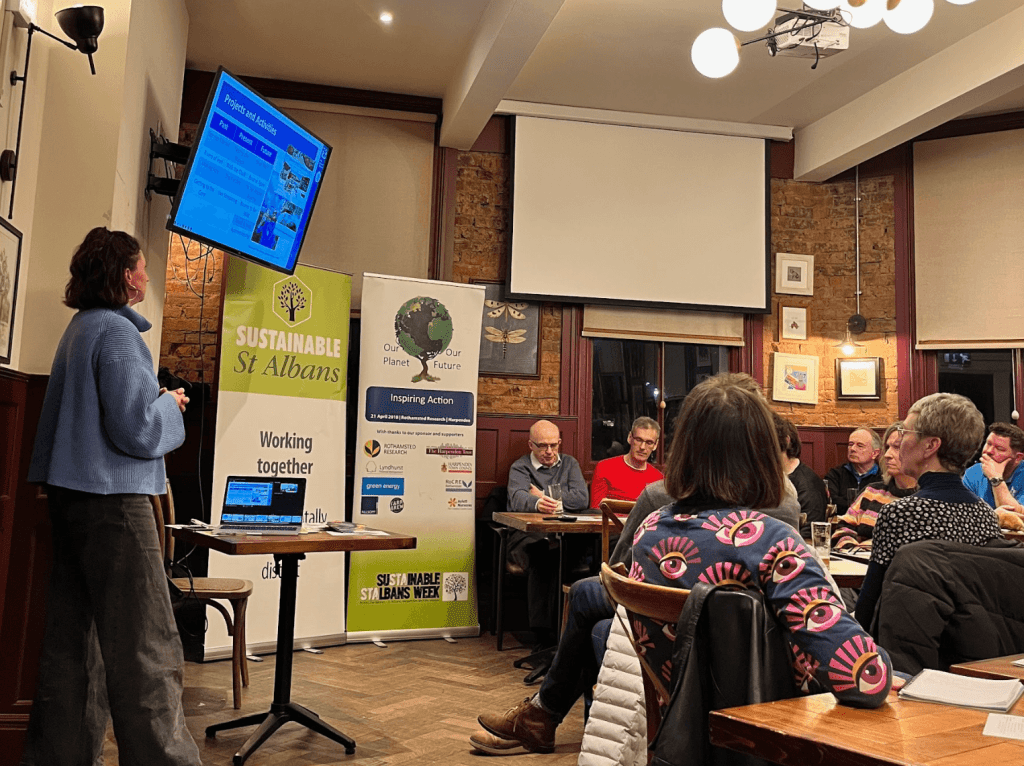
Currently, the programme is in planning stages, and they hope to win a grant to roll out more plans in December, including:
- Creating an interactive map telling local stories about the streams
- Archaeological investigation on different sites around chalk streams
- Running guided walks and fishing events
- Supporting young people who want to get into a career in conservation
- Recruiting citizen scientists to monitor the rivers
- Getting schools, artists and young people involved
The project’s viral TikToks are already enthusing their core audience of 14–25-year-olds. If successful, the initiative will expand over the next five years. Find out how to get involved below.
How you can get involved
As always, our evening closed with a lively discussion, with attendees sharing lots of ideas including the ones below.
Chalk streams are part of our unique local heritage, but they’re fragile and need our help. Here’s how you can get involved:
Volunteering opportunities
- If you have time to spare and a soft spot for water voles you can volunteer as a water vole surveyor. Get in touch to express interest by contacting water.vole@hmwt.co.uk.
- Batford Springs Volunteers will be releasing water voles at the start of June. You can get in touch with Harpenden Town Council’s Green Spaces Officers by emailing harpenden.town.council@harpenden.gov.uk or calling 01582 768278 If you’d like to help.
- Ver Valley Society volunteers help improve river habitat, monitor river invertebrates and water quality and check phosphates and nitrate levels. Join them here.
- Not Bourne Yesterday will begin their citizen science programme from 2027. They will also need support in recording oral histories. Keep an eye on their website and social media here.
- If you run a Scout, Guide or similar group then explore the Chalk Stream Challenge Badge, a new scheme to help children discover chalk streams.
Events
- Dawn Chorus Walk, Batford Springs, 5:45 am, 11th April. Listen to birdsong before enjoying a tasty breakfast.
- Watershed: A River’s Call to Action, All Saints Church, Batford, 11th–26th April. This art exhibition includes large-scale installations, including a huge cascading willow sculpture, striking visual poetry and an immersive interactive video installation.
- Batford Nature Day, Batford Nature Reserve, 11 am, 6th June. A fun family event with guided tours, river dipping, bug hunting, trails and hands-on activities.
- Take part in the Earthwatch Water Blitz, a bi-annual campaign that invites everyone to get outside and test the quality of freshwater bodies to build a clearer picture of water quality across the UK. Their spring event is full, but you can register your interest for the next one.
From home
- Watch the Channel 4 documentary series Dirty Business to understand how England’s water companies have jeopardised our local habitats and health.
- Learn more about our chalk streams in Not Bourne Yesterday’s 12-minute video.
- Catch up on our previous chalk streams talk from 2019.
Our next event
Our Planet Our Future event is a screening of Together We Cycle, which investigates how the Dutch revived their cycling culture and asks what we can learn from it. Book your free spot here to join us at 7:30 pm on the 11th of May at the Harpenden Arms.