I was delighted when we got the quote through from Solar Streets provider IDDEA. For less than the price of one annual season ticket into London we had the opportunity to install electricity-producing photovoltaic solar panels. These would simultaneously reduce our draw on the electricity network, reduce our monthly bills and make a small but valuable contribution to a local community solar scheme.
This week, Will Tucker, Chair of the Council’s Climate Advisory Group, and Lib Dem Councillor for St Peter’s ward in St Albans, shares his experience of installing solar panels on his house using the Solar Streets St Albans scheme.
Like lots of families in St Albans, Harpenden, and the wider district, we are really worried about the climate emergency and the need for society to rapidly reduce our reliance on carbon-intensive energy production like dirty coal and gas. We think of ourselves as a reasonably green household: we’ve used Ecotricity as our energy supplier for years, we minimise use of our car, we eat a mostly plant-based diet and we’ve installed extra insulation in our loft cavities and on our external walls to keep us warmer and reduce our energy use. Many people nowadays aspire to being even greener and, for us, solar panels was the next step.
St Albans Solar Streets is a community solar project. St Albans District Council is working in partnership with the installer, IDDEA Ltd, to help homeowners and businesses access discounted solar panels. For every installation completed, a contribution is made to a community energy fund. This will be used for a community project in St Albans District. There are several other local solar installers too – look on the MCS Accredited suppliers list and search for St Albans.
For us, the Solar Streets scheme gave us the confidence to install solar panels.
You might be in the same position as we were – unsure about various aspects of what it involves. So, let me deal with any worries you may have.
“For us, the Solar Streets scheme gave us the confidence to install solar panels.”
1. Will solar panels go on our house?
Like thousands of residents in and around St Albans, my wife and I live in a 100 year-old terraced house with a rear loft extension and Velux windows to the front. I was worried that there might not be space on the roof for solar panels, or that the roof structure might not be appropriate. I needn’t have worried – within a day of seeking a quote the company had worked out a draft layout using satellite images of the roof of the house and were ready to come and quote ‘for real’. The solar panels come in different sizes so they’ll find a solution which fits your home.
The need for new wiring was minimal in our house as there was a mains connection on the wall just below the solar panels. The electrician only took a few hours to install what was needed inside – a couple of power line cut-offs and an inverter which takes the Direct Current from the panels and converts it into Alternating Current for our use.

2. Do I need planning permission for solar panels?
This is an important consideration. Planning permission wasn’t necessary for us as we live outside the conservation area and the way the panels have been fitted meets the requirements for ‘permitted development’. Check out the Planning Portal, then St Albans District Council’s website to check for your property and speak to your solar panel installer too.
Whether you need planning permission or not, your installation will need to meet building regulation requirements. By working with a reputable supplier, such as IDDEA, you’ll ensure that building regulations are complied with and get the compliance certificate once installation is complete.
“The solar panels come in different sizes so they’ll find a solution that fits your home.”
3. Will solar panels be affordable?
Our total installed price was £3,175.75, which is a lot of money. However, we rationalised it by saying to ourselves that we’ve just had a year of working from home, so we haven’t had to pay for our daily travel into London which would usually be £3,712 each.
2020 was a tough year for so many residents and I appreciate that now won’t be the time for everyone to invest. But for those families in the area who have saved money on commuting, holidays and other expenditure over the last year, now might be just the time to invest in your home.
In terms of return, our calculations are that the panels will cover around two thirds of our usage. We hope to get back our spend on the solar panels via savings on our electricity bills within four or four and a half years – which is a pretty good pay-back period. On top of that, Ecotricity are working on an improved ‘export’ tariff and other suppliers already offer good rates for households who produce more electricity than they use. So we hope to take advantage of that as well.
4. Do solar panels need to face south?
It’s true that solar panels do produce maximum electricity when they face south. However, with ours facing East, we should still get most of the benefit: they should only produce around 20% less than if they faced south. For us, they were still well worth it. IDDEA has some nifty software which works out how much energy the panels will produce when they provide a quote.
5. Is it disruptive having solar panels fitted?
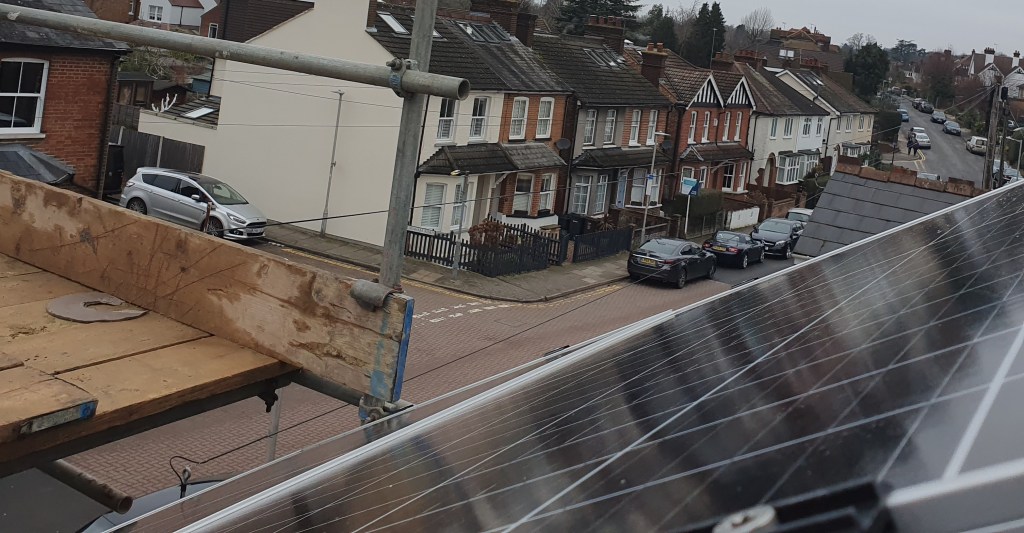
It wasn’t disruptive for us. Scaffolding was put up in front of the house in a morning, then over the course of a couple of winter days the solar panels and electrical connections were installed. We’ve had these installed during the Covid-19 pandemic and so we were a bit worried about having workmen in the house. However, the vast majority of the work was outside the house and the electrician who needed to come in was very attentive at keeping more than two meters away from us, wearing a mask and keeping the room he was in well ventilated.
If you think solar panels might be an option for you, get in touch with IDDEA for a quote via the Solar Streets page on Sustainable St Albans website. Mention Solar Streets when you contact them to ensure they contribute to the local St Albans District community solar project fund.

Environmental groups of St Albans District have come together to set up the St Albans Climate Action Network who are hosting their own special St Albans Climate Action Network page. Simply visit the page, explore the 16 steps and pledge to take one step by choosing “Take a Step”. When you register, tick that you are part of the “St Albans Climate Network” to have your step counted on the St Albans page.
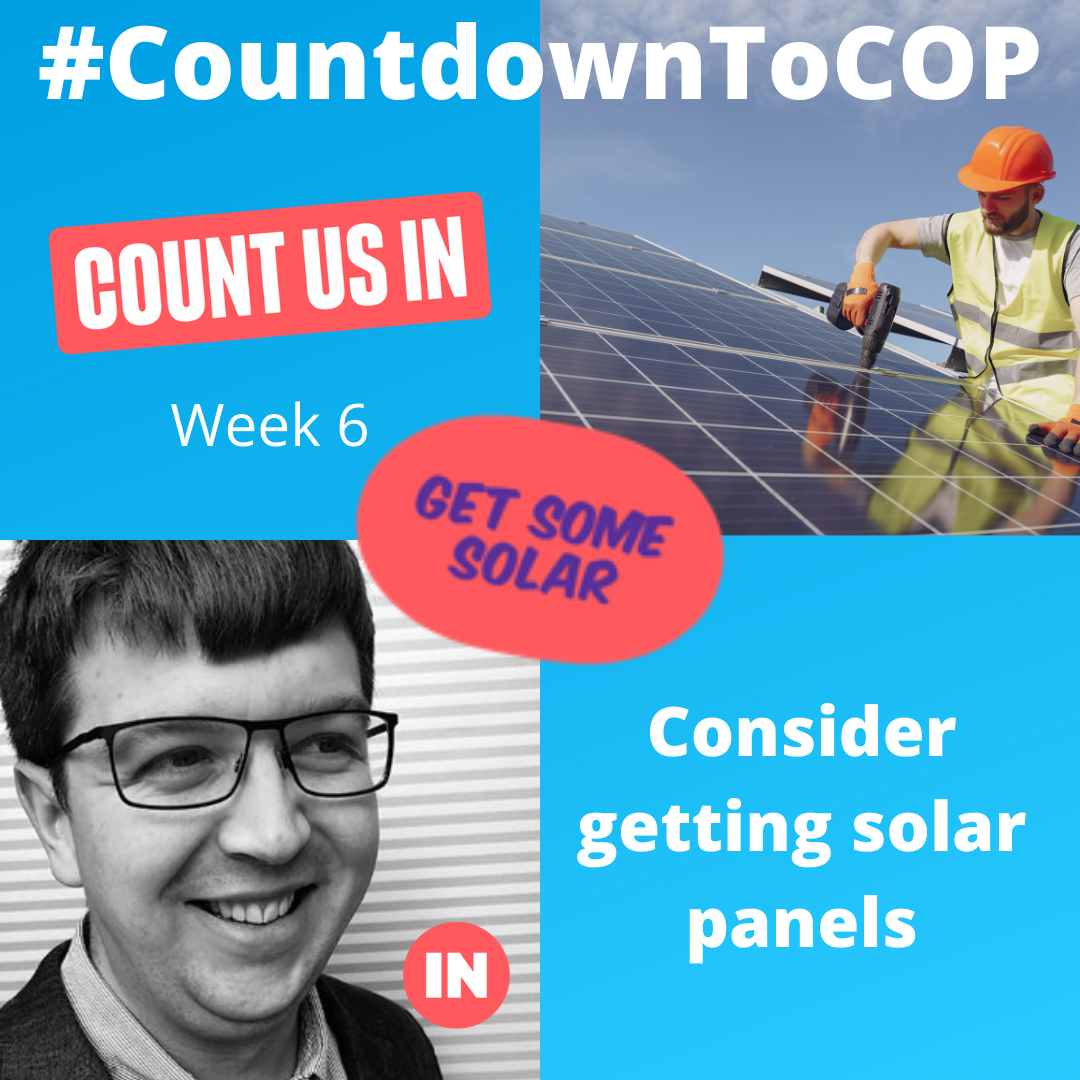
Join in today and use Will’s solar panel story to choose the “Get Some Solar” Step as your pledge.
You can track the carbon impact of your own actions. As more people join, we will all see our cumulative efforts across St Albans, Harpenden and the villages.
We will have a blog every Sunday until the international climate talks in November, COP26. Each blog will focus on one of the 16 steps. Look out for next week’s blog on eating seasonally by Juliet Foxwell.
Interesting to read the chat about solar panels.
But as it does not mention how many panels were installed for the price of over£3,000 it is lacking in facts.
No mention of the option of installing battery packs to save any electricity not used and trickle feed when needed in the home.
And just a mention of possible payments for electrify fed into grid.
At the moment any excess electricity, the electric company gets for free. So not a good deal at all for the people paying to install these panels.
Still some way to go on this
Please have a look on the St Albans Solar STreets website for more information on the points you have raised – they have some good information videos with a lot more in there. https://solarstreets.co.uk/stalbans