
How to Repair and Reuse
Philip le Riche tells us about his lifetime of repairing all sorts of items, Restart Parties, and how you can… Read More »How to Repair and Reuse
Philip le Riche tells us about his lifetime of repairing all sorts of items, Restart Parties, and how you can… Read More »How to Repair and Reuse

WHY DOES TALKING ABOUT CLIMATE ISSUES AT WORK MATTER?
Getting your colleagues engaged in taking climate action, both in the workplace and in their homes, will be one of the fastest ways to multiply your personal impact on carbon pollution.
Depending on how much influence you have, you might to want to focus on your employer’s own carbon footprint (things like how the buildings are heated, work-related transport, procurement, and waste) or you might simply want to tell colleagues about the 16 Count Us In steps, and encourage them to sign up as individuals.
Most employers have corporate emissions that are many, many times higher than any individual’s emissions, so any influence we can bring to bear at work will have a far higher impact than making savings at home (not that we shouldn’t do both!).
WHERE TO START? GET INFORMED
READ: our blog on speaking up at work by Dan Fletcher, trustee of Sustainable St Albans
LISTEN: to Dan in this special #CountdownToCOP Radio Verulam podcast talking about Speaking Up At Work
WATCH: this inspiring 20 minute video from world-renowned climate scientist Katharine Hayhoe.
She explains why the most important thing you can do to fight climate change is to talk about it. This inspiring, pragmatic TED talk has been viewed nearly 4 million times, and with good reason. In it, Hayhoe shows how the key to having a real discussion is to connect over shared values like family, community and religion — and to prompt people to realize that they already care about a changing climate. “We can’t give in to despair,” she says. “We have to go out and look for the hope we need to inspire us to act — and that hope begins with a conversation, today.”

Read the “Talking Climate Guide” from Climate Outreach. It outlines different strategies for talking about climate issues. Climate Outreach say, “Having conversations about climate change in our daily lives plays a huge role in creating social change. We take our cues about what’s important from what we hear our family, friends, colleagues and neighbours talking about. Politicians need strong social consent to implement successful climate policies. But talking about climate change, especially beyond the green bubble, is hard. That’s why we’ve produced an evidence-based, practical guide to help make those conversations easier and more meaningful – and to come out of them feeling inspired and connected.”

FIND OUT WHAT YOUR EMPLOYER HAS ALREADY DONE (AND WHAT MORE THEY COULD DO):
Many companies are already taking climate action, so ask around at work:
There are a variety of targets they might have set, including:
Once you’ve found out what’s already in place, it should point to what action to take next.

A GREAT FIRST STEP: HOLD A CLIMATE CONVERSATION
Sustainable St Albans has created resources to help you hold a Climate Conversation. It’s totally free to use, and it’s ideal if you want to talk with others about climate change, but you’re not quite sure how?
A Climate Conversation is a chance for a group to discuss the climate crisis, their thoughts for the future, and what actions to take.
To run one, you gather a group colleagues, either on-line or in person, for a 2 hour session or 2×1 hour lunchbreaks. You download all the materials you need from our website, or email us to ask for printed copies. The materials guide you; no-one needs to be “the expert”.
All the materials you need to hold a ‘Climate Conversation’ are easily available on our website, alongside FAQs.

Heating your home is one of the major ways that any household creates carbon pollution.
Dialing down your thermostat will save money too. Research from the Energy Saving Trust states you can typically:
(Typical savings for a three-bedroom semi-detached home, heated by gas. Figures are based on fuel prices as of June 2021.)
Read our blog “How to dial down your home energy consumption”.
Watch this short video from the Energy Saving Trust and the Telegraph, with five easy tips to save up to £400 per year and save energy (3 mins).
And this animation from B&Q, which offers even more practical tips (3 mins).
This short video takes your through the main types of thermostat and how to use them (3mins).
This guidance from the Energy Saving Trust provides an overview of thermostats and heating controls, and the benefits of “dialling it down”.
And here, Which? magazine offers a round up of how to adjust typical boilers and thermostats.
Lost your manual? To find information on the heating controls in your house, you can use Google of course, but also try YouTube. For example, searching on YouTube for “Honeywell thermostat” brings up this list of instructional videos, and then you can scroll the photos to see which one looks like yours, and watch the video.

Have a discussion with the other members of your household; different people like different temperatures. Explain why it’s beneficial to dial it down, and agree on a lower temperature for your thermostat that you can all cope with. Try it for a month.
Whilst you are at it, why not also identify any other energy measures that you might want to take, for instance by looking together at the guidance from the Energy Saving Trust or Waterwise.

If your concern is that you can’t keen the house warm enough, then;
Saving carbon, materials and money – and learning new skills too!
Regular events to help you repair and reuse items that may otherwise be discarded.
Tips, tutorials and advice to save your stuff from the bin
We love a bit of reuse in St Albans! Although many of us have got into the habit of throwing things away easily, producing new consumer goods often generates a lot of carbon pollution, not to mention the volume of waste, and the loss of the precious materials into un-useable refuse… Repairing one item won’t save the world, but if it becomes a habit, it can quickly add up and make a huge difference! Resources for how and where to repair your items are below, and don’t forget that we run Repair Fairs across the District, and throughout the year. Keep an eye on our events for future dates.

Repair isn’t just about saving money or the planet. There are other benefits too. Fixing things can be fun – an opportunity to learn new skills or develop existing ones. And you’ll finish with a sense of satisfaction of a job well done.
Find out more:


Find dozens of links for buying, selling, upcycling, recycling, and mending your clothes on our sustainable fashion page.
Need clothing repaired or altered?
There are several local cobblers, including the Calling Cobbler who collects and delivers locally.

For advice, try the Cycle UK website. They offer:
Watch this practical talk on “Basic Bike Maintenance” given during SustFest21 by the Verulam Cycling Club.
If that isn’t enough to get you sorted, take your bike to one of our great local bikes shops, or use one of the local mobile cycle mechanics who come to you house and sort out your bike. For example, locally there are CycleTech, Botox Bikes, The Bike Loft in Redbourn, and more.
Local bike shops buy and sell secondhand bikes, as well as new ones, especially kids bikes which are quickly outgrown.
If you have a street WhatsApp group, that can be a great place to find and offer bikes.

For repairs, again, YouTube is your friend, and is filled with repair guides.
The Recycling Centres have reuse areas where you can donate and buy household items (check the latest status with regard to COVID).
Some furniture can be re-homed through Emmaus, and you can buy from their shops.
Charity shops accept many household items.
Follow the Facebook Group for Sustainable St Albans’ project St Albans Fixers to hear about dates of upcoming repair fairs in St Albans and Harpenden. St Albans Fixers is using the model established by the The Restart Project. Restart aims for a more sustainable relationship with our electrical and electronic devices by encouraging and enabling community-based repair. Restart is growing a global network of affiliated groups supported by an online community, a repair wiki and a “Fixometer”, which tracks CO2 emissions and waste averted. Restart is also increasingly active in lobbying for “right to repair” and design for repairability.

The Repair Shed in Dacorum is part of the Men’s Shed movement, aiming to help men aged over 50 to stay healthier and happier for longer, by making, mending and learning (though it does have younger members and women members). Shedders work on their own project and also community projects and commissions .. so do contact them if you have a wooden something that needs fixing!
They also run a Repair Shed in Redbourn. As well as wooden repairs, they also have a Sewing Cafe which (before lockdown) was running sessions on Thursdays from 10.00 am – 12.30. For the latest, follow them on Facebook.
On the 9th September 2019 Sustainable St Albans held an event ‘What can you fix’ at The Harpenden Arms featuring Doug Root from The Repair Shed, and Philip le Riche from the Restart Project.

The Repair Shed in Dacorum is part of the Men’s Shed movement: the aim is to help men over 50 to stay healthier and happier for longer by making, mending and learning (though it does have younger members and women members). Shedders work on their own project and also community project and commissions.
The Restart Project aims for a more sustainable relationship with our electrical and electronic devices by encouraging and enabling community-based repair. Our speaker, Philip has taken part as a fixer in many “Restart Parties” in London, and organised one as part of St Luke’s Upcycle and Repair Fair during SustFest19. He described his own involvement and also how Restart is growing a global network of affiliated groups supported by an online community, a repair wiki and a “Fixometer”, which tracks CO2emissions and waste averted. Restart is active in lobbying for right to repair and design for repairability.
Restart resources:

WHY FLY LESS?:
Flying is a major source of carbon pollution. Not everyone has the privilege of flying, but if you do, taking a few less flights is one of the best ways to dramatically reduce your carbon pollution.
Avoiding one flight per year will save tonnes of CO2;
There are a range of travel calculator available online, including from Atmosfair and Climate Stewards . Try calculating your whole carbon footprint online with the WWF; do it once with and once without flights, to see the difference.
We know people are desperate to travel again, and to see far-flung family; few people will commit to never flying. However, flying less is a key action you can take, especially those short haul journeys which can reasonably be replaced by train or coach.
READ: our inspiring blog “Fly Less and Explore More with YHA” and consider a different holiday this year.
LISTEN: to James Black of YHA in this special #CountdownToCOP Radio Verulam podcast talking about Flying Less

TRAVEL BY TRAIN:
Try the Seat 61 website, for routes and information about European and worldwide train travel.
Use the Rail Europe website to buy end-to-end tickets for European routes.
The Eurail pass allows unlimited travel across Europe for a fixed period of time.
Discover all of Eurostar’s destinations – with trains direct to Paris, Brussels, Lille, Amsterdam, Rotterdam, as well as connecting destinations in France, Belgium, the Netherlands and Germany, with an easy change in either Paris, Lille or Brussels.
The Caledonian Express takes you overnight to locations in Scotland including Glasgow, Edinburgh, Dundee, Aberdeen and Inverness.

TRAVEL BY COACH:
Coaches have a lower carbon footprint than flying, and are generally cheaper than trains.
There are lots of different operators, but for example:

TRAVEL BY FERRY:
Many locations are reachable by ferry; France and Ireland, of course, but also Spain, Holland, Belgium, the Scilly Isles, the Scottish islands, and the Channel Islands.
There are lots of different operators, but for example:

CUT DOWN WHAT YOU CAN’T CUT OUT:
If you are going further afield, can you reduce the impact? For example:
Sign up to take climate action today, and make changes that matter.
When you register, tick to say you are part of the St Albans Climate Action Network, and then your steps will be counted alongside other local people.
Low emission vehicles will be crucial in the transition to our low-carbon future. The next time you’re thinking about purchasing a car, consider an electric vehicle (EV) – your purchase will significantly reduce your carbon pollution and improve local air quality. You can also look to the latest Euro6 emission standard which represents the highest standard in carbon dioxide and nitrous oxide emissions for a vehicle.
Instead of burning fossil fuels, EVs are powered by a battery, which is charged by electricity. Since electricity is becoming gradually “cleaner”, as the proportion of electricity in the national grid produced by renewables increases, switching from petrol to electric cuts your carbon footprint by two thirds.
All sales of new petrol and diesel cars are stopping from 2030, with some hybrids allowed until 2035, so it’s a question of “not if, but when?”.

READ: Our blog “The Road to My First EV: I’ll never buy an electric car!”
LISTEN: to this special #CountdownToCOP Radio Verulam podcast talking about Driving Electric Cars
Fully Charged is a website and YouTube channel with lots of videos about everything to do with electric cars. It’s a great place to find reviews and guides.
A brilliant place to start is their series “Maddie goes electric“. This follows presenter Maddie learning all about electric cars and the reality of driving and charging one. There are 6 x 25 minutes episodes or one summary, 20 min “super cut” version of the series.

Not sure what models are suitable for your needs? Use the EV Database to filter all available models by multiple filters; for example than you want a range of 200 miles, 5 seats, and a price of less than £30k.
Visit the Electric Vehicle Experience Centre in Milton Keynes to see and test drive multiple different kinds of electric vehicles.
Like a petrol car, you can buy new EVs from dealerships or you can buy them secondhand, from sites like Autotrader or from local garages such as the St Albans Car Centre. Filtering by fuel type will give you a feel for what’s available.
There is also the leasing option, through sites such as Wevee and OnTo. This can allow you to try a car out for a while, if you aren’t sure about purchasing.
Ask your employer whether they offer a salary sacrifice scheme: your company leases the EV, but you pay for it with a monthly deduction from your pay – before income tax and national insurance – making it a cheaper option for you.

Anyone thinking about an electric car is thinking about range and about charging. Range is becoming less of an issue, since newer models typically have 200 miles on a single charge now.
There is guide to charging on the ZapMap site, or watch the Maddie goes electric video above.
If you have a driveway, then you could consider a home charging unit (you can learn about home chargers with Charging At Home). Public chargers are all shown on ZapMap and St Albans Council is expanding the network of public charging points, including at Westminster Lodge.
We are proud to deliver, the Harpenden Sustainability Markets, in partnership with Harpenden Town Council four times a year (March, May, September and November). Each market welcomes local eco and food stalls to help you live a more sustainable life. Plus we will have entertainment from The Reverbs Ukulele Band at all our 2026 markets!
Find out more about our Eco Stallholders in our Meet The Stallholder series of blog posts.
Stallholders: see Stallholders Market information or email us on markets@sustainablestalbans.org
Follow us on social media for images of previous markets to get a taste of the day! A selection of photos are below:

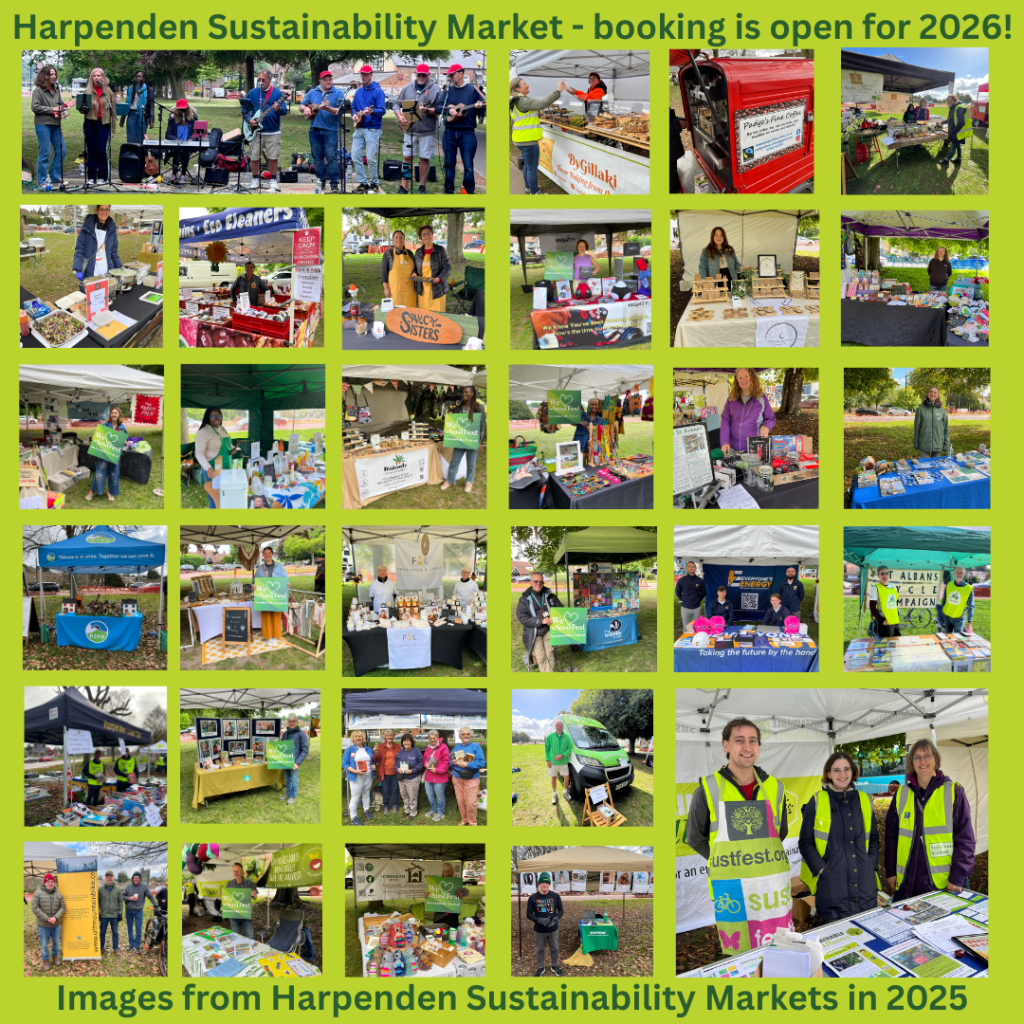
A few of our 2025 stallholders

A summer break from the usual routine is the perfect time to explore fresh ideas through your readin…

The 5th of August is a very special day, it Playday 2026 and their tag line this year is ‘Play – her…

For Our Planet Our Future’s latest book club meeting, we picked The Good Communicator by local susta…

Do you enjoy cooking up delicious meals from scratch? Then you’ll love Harpenden Sustainability Mark…
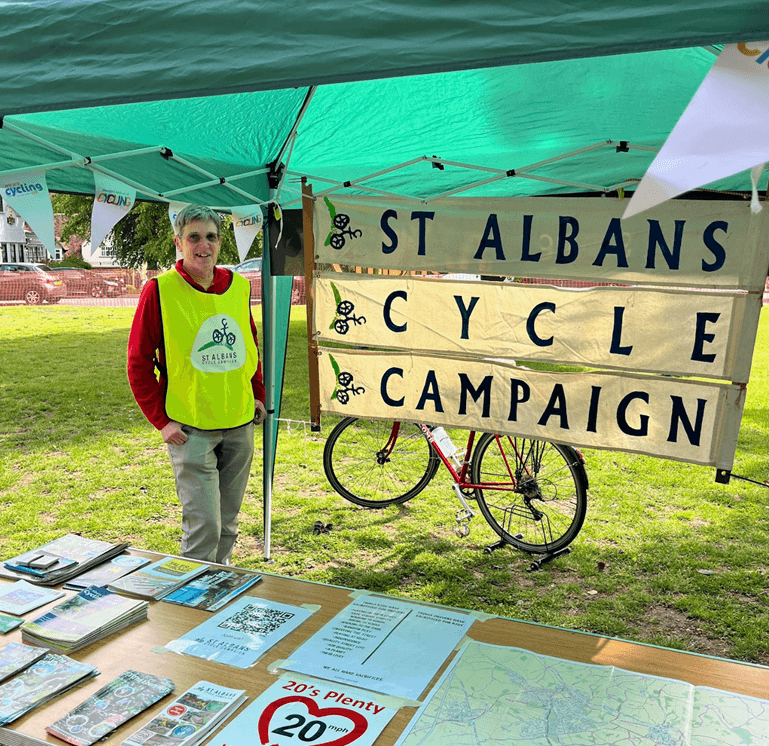
Cycling is a great way to get around. It’s good for our health, good for the environment and o…
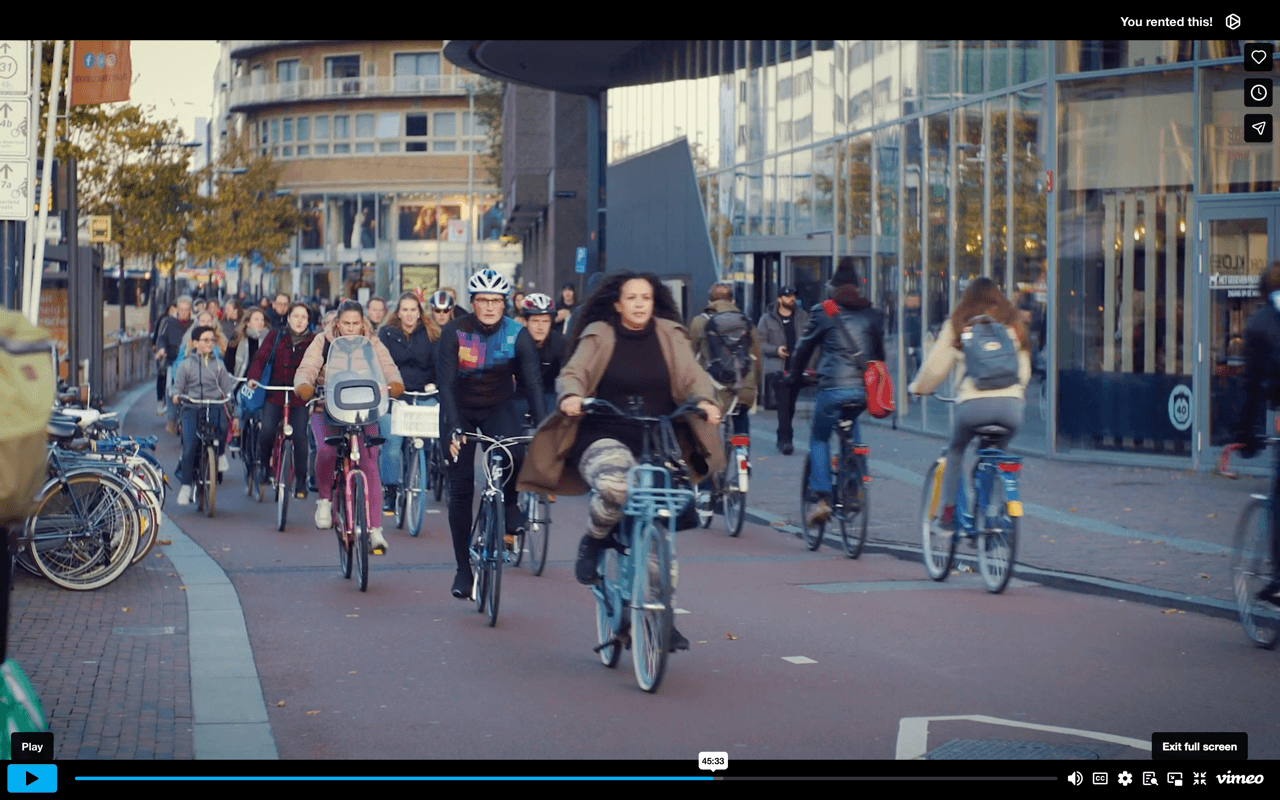
The Netherlands is regarded by many as the cycling capital of the world. But did you know this wasn’…


Becky Alexander shows us how we can introduce more plants into our meals, cutting our carbon footprint while exploring delicious… Read More »Quick and Easy Ways to Eat More Plants

Susheel Rao looks at getting past the barriers that stop us leaving the car at home – particularly how we… Read More »Leave the Car at Home: How to Start Walking and Cycling More
As individuals and communities we can take steps to significantly reduce our own carbon pollution. But this won’t be enough unless our politicians work with us to create the projects, laws and incentives that will deliver the changes we all need.
If we are to avoid the worst effects of climate change, we need our governments and councils to do their part. You can help by letting your elected representative know how you feel and encouraging them to be part of the solution.
Our elected representatives act on the things they believe we, their electorate, cares about, and will take bolder action if they know we support them in doing so. They will be lobbied by a range of groups, some of whom may regard climate as less of a priority, so it’s useful if they are aware of the strength and range of feeling about climate-related concerns.
Although it can feel intimidating to contact them, many people find it a positive experience that helps them understand local issues, connect with others and feel part of broader efforts in their community. Find out how Jess got on in this blogpost or read our guide below on who represents you locally and nationally.


Put your postcode into Write to Them, and you can quickly identify your MP.
You can use They Work for You or Members Interests to learn a bit more about your MP’s interests and voting records.
While not elected, it is worth remembering you can also contact members of the House of Lords. For example, the Lord Bishop of St Albans lists the environment as one of his areas of interest. You can find a list of the Lords and filter it by areas of interest here.

Put your postcode into Write to Them, and you can quickly see a list of your councillors.
You may be in an area that is served by a town or parish council, which get involved in climate issues in a range of ways – for example commenting on proposals for new buildings and modifications, managing biodiversity of green spaces, and promoting local shopping and low carbon initiatives.
Some local councils have written or are working on “neighbourhood plans” which set locally determined rules for environmental considerations such as protecting green spaces and setting building standards.
If you’re not sure which of these parish areas you may be in, enter your postcode here and it will tell you whether you have a parish council and if so which it is. From there, search online for their website.
If you live in Harpenden, you are covered by Harpenden Town Council. You can find their environment presentation here, and their neighbourhood plan here.

Read this virtual lobbying guide from Hope for the Future.
A handwritten letter has more impact than an email, and a personal email holds far more weight than a standard “copy and paste” email from a campaign.
One option is to use the Write to Them website to contact your politicians. These are their guidelines:
If your elected representative has a social media account, then you can also use this to make your points of praise or concern. The same general rules apply: be polite, specific, and speak to your concerns in your own words.
MPs and some councillors hold surgeries, at which you can discuss concerns in person.
There are set processes by which you can ask questions at council meetings, and even bring petitions. Read the relevant website for details

Tell them you care, and why, in your own words.
Ask them about things which are under their influence:
Ask them to take personal action and show leadership, for example through signing-up for Count Us In and sharing what they have done.
If you see that your elected representative has said or done something that you really agree with and appreciate, let them know. Positive messages are the easiest sort of communication to make and really help reinforce action. They don’t get many positive messages and the impact will be huge!
Watch the recording of Sustainable St Alban’s youth-led event “Activism and Optimism“, run in June 2021. This was an event for 14-27 year olds in St Albans district to talk all things sustainable with their political representatives. You can hear from both MPs and a range of councillors.
To find out about our youth group, email youth@sustainablestalbans.org.

WHY NOT STAND YOURSELF?:
Don’t forget, that you could stand for one of these roles yourself. We can’t all become MPs, but what about becoming a town or parish councillor, a school or college governor, or a board member of a local health organisation or housing association?
Thousands of decisions are made every day by these organisations, and ensuring that carbon is a factor in all of them requires many hands!

Caroline Wilson gives us 10 top tips on reducing food waste at home – cutting both our carbon footprint and… Read More »10 Easy Ways to Reduce Food Waste

Ian Yenney looks at how switching your energy may be the easiest step you can take to reduce your CO2… Read More »Switch Your Energy