Active travel is a fancy way of saying ‘make your body move while you travel around in your day’… And we love Active Travel in St Albans!
Whether you’re walking to school or work down the Nickey Line or the Alban Way, riding your bike to the shops or jogging to work, active travel reduces congestion on the road, improves air quality, reduces carbon emissions, positively impacts nature and improves your mental and physical health too.
The general advice is to try to walk for journeys under 1 mile, ride a bike for journeys under 3 miles, and avoid single occupancy vehicles for longer journeys.
Walk More Often
Hertfordshire Health Walks are free and support those who have been inactive for a while to take their first steps.
Walk to School resources may help to encourage other families in your community to consider leaving the car at home and maybe even creating ‘walking school buses’.
Keeping your routes to side streets and footpaths if possible can also reduce your exposure to air pollution. Check out Clear the Air to check your regular route.
Watch this pracical talk on “Basic Bike Maintenance” given during SustFest21 by the Verulam Cycling Club.
If that isn’t enough to get you sorted, take it to one of our great local bikes shops, or use one of the local mobile cycle mechanics who come to you house and sort out your bike (either there or picking it up and taking it away). Locally there is CycleTech, Botox Bikes, The Bike Loft, St Albans Cycles, BC Cycles and many more.
Local Hubs
St Albans Cycle Hub C.I.C is a not for profit Bike shop, Training centre, and Cycle reconditioning centre. Based at the Cottonmill Community and Cycling Centre, you’ll find a pump track, Cyclocross/XC Track, Dirt Jumps and a Leisure Track to try out your tricks and pedals too.
St Albans Cycle Campaign are working to make cycling infrastructure better in our district. STACC campaigns across St Albans and the surrounding area to:
encourage cycle usage in the St Albans District
promote cycling to play a more significant role in a balanced transport system for the St Albans District
support, assist and influence to local authorities responsible for managing the transport system in the St Albans District.
Get involved to build your confidence:
If you are worried about cycling by yourself on the road, you can build your confidence by joining a group ride. British Cycling, in partnership with HSBC, support volunteers to run rides for different ages and levels of riding experience and you can find local cycling groups including Breeze, their ladies-only rides.
South Herts Cyclists also offer groups, including an occasional ‘5 miles to fabulous’ ride running from Morrisons in St Albans, which is a great way to start.
Car Free cycle ways run between St Albans and Harpenden, Swan Walk between Harpenden and Luton, and the Alban Way between Hatfield and St Albans Abbey station. The Nicky Line runs between Harpenden, Redbourn and Hemel Hempstead (not fully paved). See descriptions and maps of each of these routes on the Council’s cycling and walking webpage where you can download the District wide cycle map or request a printed copy.
Sustrans is the national sustainable transport charity, which has developed a network of cycle paths. Go and have a look at what is in the area, or where you are heading on holiday.
You can do route planning and find routes through apps such as strava, kamoot and map my ride.
Need Storage?
The Council is currently gauging interest for on-street “bread bin” bike storage through their webpage.
There are some innovative solutions for sale , suitable for people without room for a shed or bike store. Have a look online for space saving bike storage, and consider options like Plant Lock – where you attach the bike to a planter outside your house.
GET INFORMED ABOUT THE ISSUE:
A great place to start is Love Food Hate Waste. In UK households we waste 6.5 million tonnes of it every year, 4.5 million of which is edible. The average family of four can save just over £60 per month by reducing their food waste.
Some examples of a £4 Magic Bag from Simply Fresh Hatfield using the Too Good to Go App
TRY OUT FOOD WASTE APPS AND SITES:
You can rescue food from the supply chain using the Too Good To Go App. Buy a Magic Bag of surprise food close to it’s sell by date from grocery stores, restaurants and cafes, at about a quarter to a third of its original cost, or sometimes even better.
Also, check out the Olio app where you can both share with, and rescue food from, your neighbours.
Try Oddbox for fruit and veg that doesn’t meet supermarket standards but is still perfectly edible. (It’s worth asking around for a referral code.)
Bread rescued and shared by Sopwell Community Trust.
FIND LOCAL GROUPS:
Search online for local social enterprises near you which are joining the movement to reduce food waste including Community Fridges, Food Schemes, and Community Cafes. For example, you can become Bread Buddy for the Sopwell Community Trust, redistributing bread in the community.
The Sparks Community Café in Hatfield often rescues food close to their sell by dates from supermarkets such as Waitrose, which can then be bought on a “pay what you can” basis, and sometimes is free.
The world as we know it relies on burning fossil fuels for heat, power, food and travel. But it doesn’t have to be that way. Changing how we power our world is key to reducing our greenhouse gas emissions and adapting to a coal-free future. St Albans District is proud to boast solar panels on many homes and buildings but we can all do more to make sure we abide by the energy hierarchy: and when we do buy energy, we do all in our power (!) to move away from our reliance on coal and gas.
Leaner & Keener
Make your home more energy efficient to reduce the energy we use and waste
Moving to a supplier who uses some or all energy from renewable sources is possible, and may not be as hard as you think. If you’re buying energy into your home, you may be able to choose to have energy created from the sun or wind! Read on for resources and ideas for factors to consider.
Advice on switching energy providers from The Energy Saving Trust: As the energy price crisis continues it may be best to stick with your current supplier, as many suppliers are not currently taking on new customers and you may not actually save anything from switching to another supplier. If your energy supplier closes, you don’t need to do anything. You will still receive your gas and electricity as usual. Ofgem, the energy regulator, will move your account to a new supplier. They will let you know which one this is. If you’re a Bulb customer, or want to find out more, read thisinformation from Citizens Advice. Last updated: May 2022
RESEARCH HOW: Ofgem outline the process, and suggest using a price comparison website and having your postcode, the name of your current supplier and tariff to hand (which you can find in a recent bill).
Citizens Advice Bureau outline other considerations for switching such as whether there might be penalties for switching whilst in the contract period. If you have an older smart meter (SMETS 1), this may not work after the switch or with some suppliers, so you may need to ask your new provider to install a new smart meter (SMETS 2).
RESEARCH DIFFERENT PROVIDERS: The Energy Saving Trust identified the following suppliers who all clearly list the renewable sources of their energy on their websites, back in February 2020, and they suggest that these tariffs are as green as they get. They note that other suppliers may meet the same standard but couldn’t be identified during the investigation.
GEUK – the UK’s only supplier of 100% green gas and electricity – potentially the greenest of the green tariffs.
Ecotricity – also supports rewilding through a partnership with RSPB – their tariffs are well worth considering for those who want to also support nature and help address the biodiversity crisis.
Good Energy – also offers a specialist tariff for those with Air Source Heat Pumps (see below).
Also look into flexible “time-of-use” tariffs, for which the cost of energy varies through the day depending on demand. This incentivises people to use energy (and charge batteries if they have them) when there is excess renewable energy on the grid. Providers such as Octopus Energy offer flexible tariffs and there are expected to be many more providers in future. Watch this space.
They have identified changing your energy supplier as one of the steps that has the least effort and the biggest impact on your carbon emissions. So what are you waiting for?
Sustainable St Albans has been talking about environmental action in the local community since before COP21 in Paris, 2015.
We are proud of our history of social change in the District and we encourage you to talk to your friends, colleagues, family and neighbours about climate change and action too! Check out our resources for building strong climate communities in businesses and schools too.
Climate Conversations
Structured sessions with your friends and colleagues to help you get the conversation flowing.
Why it’s important to talk about Climate Change: and how to do it
It’s been proven that talking about climate change to the people in your life helps to normalise action and connect over shared values.
It’s possible to weave sustainability into conversations help you explain to the people in your life why climate change matters to you. You could tell them about the second-hand bargain you picked up, or where you got your dishwasher repaired, describe the new cycle route you just discovered, or that great vegan meal you had. Make it normal to show we care about what is happening, and want to take action, because climate change and biodiversity loss is a problem for today, not tomorrow.
If you’re not sure where to start, you can ask a Climate Champion to come talk to your friends, your book group, your business or your drinking buddies.
Resources below will help you feel confident to feel more informed, get through those awkward first moments, and help your network recognise how much they care too.
She explains why the most important thing you can do to fight climate change is to talk about it. This inspiring, pragmatic TED talk has been viewed nearly 4 million times, and with good reason. In it, Hayhoe shows how the key to having a real discussion is to connect over shared values like family, community and religion — and to prompt people to realize that they already care about a changing climate. “We can’t give in to despair,” she says. “We have to go out and look for the hope we need to inspire us to act — and that hope begins with a conversation, today.”
Then read the “Talking Climate Guide” from Climate Outreach. It outlines different strategies for talking about climate issues. Climate Outreach say, “Having conversations about climate change in our daily lives plays a huge role in creating social change. We take our cues about what’s important from what we hear our family, friends, colleagues and neighbours talking about. Politicians need strong social consent to implement successful climate policies.But talking about climate change, especially beyond the green bubble, is hard. That’s why we’ve produced an evidence-based, practical guide to help make those conversations easier and more meaningful – and to come out of them feeling inspired and connected.”
DO: Hold a Climate Conversation (designed by Sustainable St Albans, for local people to use.)
Want to talk with others about climate change, but you’re not quite sure how? We’ve got ready-made materials to help you. You gather a group of friends or colleagues, either on-line or in person. We provide all the materials you need to hold your own Climate Conversation. A Climate Conversation is a chance to take time to discuss the climate crisis, your thoughts for the future, and deciding what actions you could take. Whether it’s 2 hours over a drink with friends, or a couple of lunch-hours at work, why not start organising it today? All the materials you need to hold a ‘Climate Conversation’ with family or friends are easily available on our website, alongside FAQs.
DO: Invite a Climate Champ to your gathering: your club, book group, networking group or business lunch and learn. Our free-to-book volunteers are happy to support audiences to understand how they can take the action needed that works for them and their lives.
We knew from the outset that we would have to go down the eco route – I’m far too much of a vigilante to do anything else. The big limitation was our knowledge. The problem with starting so blind is that we were sure to miss something and now it’s too late to put it right. So one learning was that we should have employed an Eco Builder rather than go with good ‘normal’ builders who were also flying blind.
Saving the planet from the laundry room or the art of sustainable washing – In this guest blog, Terry Over looks at the environmental impact of this everyday task.
Talk about Climate change with students and teachers. We have plenty of resources in our Educate Now section. Ensure it permeates the curriculum.
Join in with local organisations and campaigns listed on our Join Now page, including our own Schools Networking Events and SustFest Schools Week.
Book a visitor to your school. Sustainable St Albans Climate Champions are available to give talks in assembly or to Year groups. Contact us via the contact form at the bottom of our main Schools page.
Use the Transform Our World Climate Action Planner tool which is designed to help everyone in the school community understand the issues surrounding the climate crisis and what they can do to take action to reduce your school’s carbon footprint.
Ecosia – why not switch your school search engines to default to this one that plants trees for every search made.
For further detailed information, you may wish to visit the Brighton and Hove Our City Our World website which has lots of information for schools including curriculum plans.
Sandringham School’s podcast “How Green Is Your School?” released by Herts for Learning Climate Action Schools which has lots of useful advice (and several ‘just one thing you can do’ tips) for sustainability leads starting out.
A series of short videos from St Andrew’s Chedworth showing its progress towards becoming a net zero carbon primary school
Discover how a Blackburn secondary school installed a heat pump under their playing field as part of its drive to net zero.
Killigrew School’s Eco-group investigated the effect screens have on heat loss from their classrooms.
Marlborough Science Academy have a great webpage listing all that they have recently done for sustainability.
The Meat-Free Monday campaign is becoming more popular with schools and a number have persuaded their catering companies in St Albans District to go meat-free on Mondays.
Look at the Energy in Schools website: a helpful tool aid for schools to be more energy aware and reduce their energy, whilst giving the opportunity for pupils to use BBC micro:bit technology to solve problems.
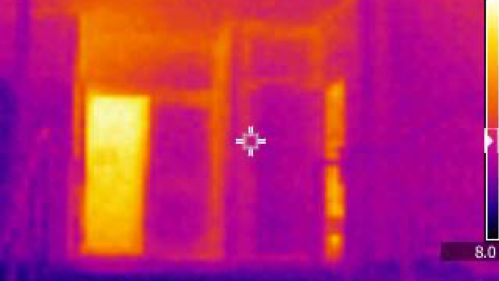
See where your school’s heat is escaping by borrowing a thermal imaging camera from Sustainable St Albans. Children love to use these too: see what Sandringham school and Killigrew School did when they borrowed one. Beaumont School used the camera to check their recently installed windows, and heat losses from other doors and windows. To borrow the Community Camera (available for week+ loans, for free) contact the Harpenden Camera Team directly at thermal.imaging@sustainablestalbans.org
Simple changes like switching off lights and turning off whiteboards can have a big impact across the whole school.
Download the excellent Wilder St Albans Schools Information Pack for initiatives and plans on “Enhancing the wildlife value of school grounds and learning outside the classroom “. They can send Wildlife Champions to your school to give advice.
Join Meat Free Mondays and try their impact calculator, where you can find out your impact on animals, people and the planet by having meat-free days.
Olio for Schools – help schools pass surplus food to those in need; also teaching resources and activities
What is your schools milk solution? Still using individual cartons with plastic straws? Why not ask your milk provider to supply large cartons which you serve in cups? Read how one local school changed this.
Sir John Lawes Eco GardenOld London Road Preschool collecting bottles
Turn your food waste into nutrient-rich compost with the Soil Squad collection service.
Reuse:
Reuse, Upcycle and recycle your school uniform! Use this parent founded website or hold uniform sales with the PTA
Promote sustainable period products for students and staff. Contact Wuka– a local business that produces sustainable period products and check out resources on Waste Aware, too.
Try refillable whiteboard markers from brands like Edding.
Litter picks
Both Veolia (waste contractor for St Albans District Council) and Harpenden Town Council loan sets of litter pickers for use by schools.
Recycle:
Separate your waste to ensure maximum recycling.
Who is your waste contractor? Did you know that St Albans District Council will pick up dry recycling fortnightly and food waste weekly from schools for free? They will provide all the outside bins, too. Contact Louise Palmer at the council on 01727 819428 louise.palmer@stalbans.gov.uk.
Use the Council’s Recycling Guide to see what they can and cannot collect
Herts Sustainable Periods – free reusable period product demonstration kit and training for teachers (how to use and clean the products, health and environmental benefits). Please email periods@hertfordshire.gov.uk.
Why not encourage families to bring hard to recycle items to school and then take the collected items to a central point. Examples from local schools include pens, batteries and baby food pouches.
Use the Clean Air Day (June) toolkit and resources for schools from St Albans District Council.
Read our blog about HomeRun, an app helping locals reduce their school run journeys. This is an innovative app, used by St Albans Girls’ School, Samuel Ryder Academy and other local schools. It lowers the numbers of cars used on school commutes, reducing traffic & air pollution outside the school gate’. Find out more on the Homerun website.
Wrapping myself up in many layers, I go out into the fresh and invigorating air, crunching over frosty grass, hardened mud and cracking through frozen puddles. The way the early sunshine lights up the dried seed heads of spent plants is simply stunning, and I now consider it one of the most beautiful sights of the year…
Can you adapt one of your ongoing activities to be part of SustFest? Jill Watson, Chair of #SustFest21 on how to build a sustainabilty festival in the midst of the pandemic…
Join us in supporting the Climate Coalition’s #ShowTheLove Green Hearts campaign this February. Show the Love for everything you want to protect from the climate crisis.