You might have complete control over your home’s carbon footprint, maybe even your business too – if so, well done, and can you please tell us how you’ve done it?! However, a much-overlooked area is your pension, savings, investments, mortgage or bank account. The interest you earn on your money is made by banks investing in other companies: you could unwittingly be supporting fossil fuel companies with your own money! Scroll now for resources on why this matters, and what you can do about it!
Learn about an alternative way of think about our economy “doughnut economics” in this BBC podcast. “Imagine a ring doughnut. This is the basis of an idea about how we could run the world in a way that gives everyone what they need – food, homes, healthcare and more – and save the planet at the same time. Economist Kate Raworth, who came up with the idea, explains how it works.”
Probably your largest investment that you don’t even think about, what companies are your workplace or private pension savings invested in? Look at the Make My Money Matter campaign for ideas on finding out, and asking your employer to make sure their scheme is a good one. Ask them if they have signed the new Green Pensions Charter, or if they will consider it.
If you have pension pots from previous employers, you could look into transferring them to a more eco-friendly provider where your money can be invested differently. But any decisions about your pension should be taken with appropriate financial advice. Perhaps try a well-known platform or investment manager like Nutmeg, Hargreaves Lansdown or M&G. Or speak to an independent financial advisor.
INVESTMENTS:
There are now a huge range of ‘green’ investment funds, that you can invest in through ISAs or other investment products. You could be investing in eco-minded companies through shares and bonds, or even in low carbon property and infrastructure. Watch out for greenwashing and ‘too good to be true’ offers. Perhaps try a well-known platform or investment manager like Nutmeg, Hargreaves Lansdown or M&G.
There is a very useful guide to fossil free investing on Ethical Consumer magazine. Whilst you need to be a subscriber to read the ranking tables, much of the article is freely available if you scroll down.
Your bank uses your money to invest. So what is it investing in? It’s not easy to find out, but you can switch to a bank that is rated highly for its ethical operations. There are lots of lists, including this one: new-money.co.uk/nm-blog/top-5-ethical-bank-accounts-for-2020
Also note that INSURANCE companies have massive funds to invest – so how are your insurance premiums being used? Ask your Insurance company.
Although a mortgage is a loan to you, you pay interest on that, so you are significantly supporting your mortgage provider. The Ecology Building Society is well known as a ‘green’ lender, even giving better deals to eco-friendly homes. But there are others too. For example, see this article.
BILLS:
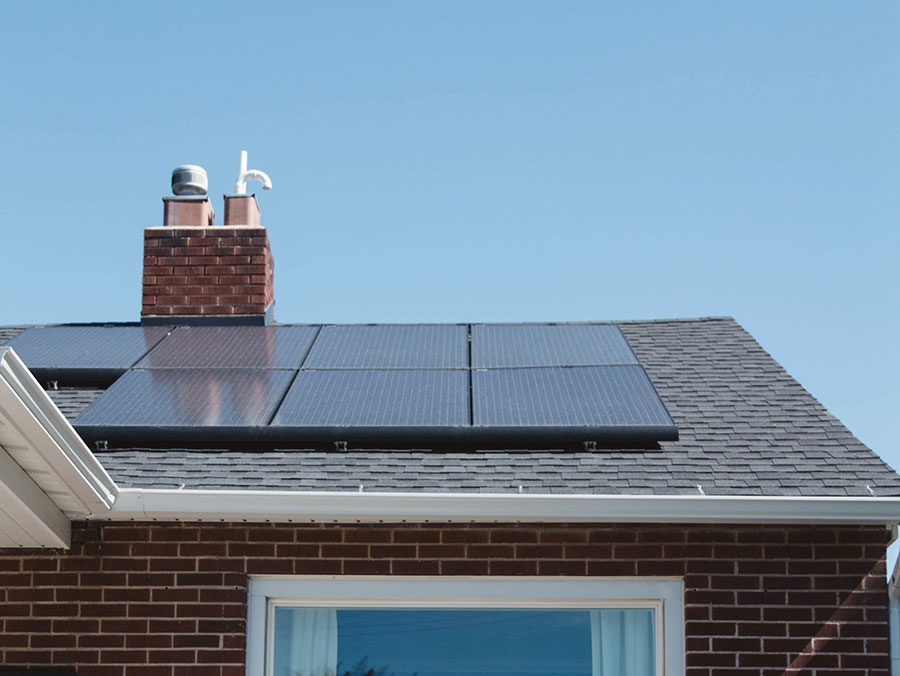
Of course, the money you spend also has an impact on the world. Green shopping gets a lot of attention, but what about your everyday household bills? As well as choosing a ‘green’ energy supplier, you can invest environmentally to reduce your bills. For example, getting solar panels and insulation to reduce your heating or electricity bills. Getting an electric car can even be seen as an investment in reduced fuel bills over time.
To find tradespeople it’s always worth looking on the searchable lists at Trusted Traders.
NEED PLANNING PERMISSION?:
The planning portal is a good place to start if you want to understand planning permission considerations for any eco-friendly adaptation of your property.
WHAT MIGHT IT COST?:
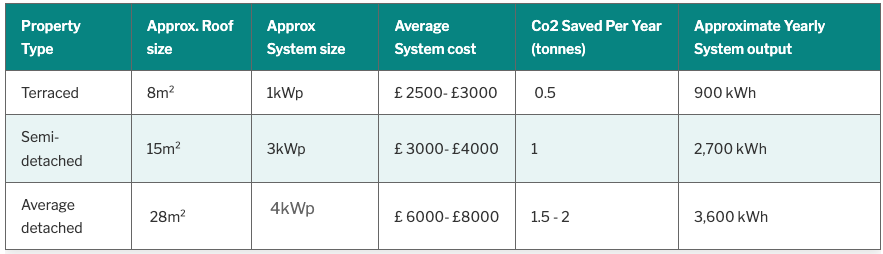
See the Renewable Energy Hub for information on the costs of typical sizes of installation, this is illustrated in the table below (2026):
Remember, you will need to pay for scaffolding, you may need to pay planning application fees, and you may choose optional extras like bird-proof netting and a gadget attached to your hot water tank, which gives you hot water with the spare electricity.
What you eat can have an enormous impact on your carbon footprint: although it is a complicated subject and it is easy to get confused by all the labelling and factors to consider. To keep it simple: only buy what you will eat, reduce your food waste, but if you must throw food away, make sure it is composted to manage the methane emissions, and finally, any time that you can choose a more plant-based option, the climate and future generations will thank you. For more detailed ideas, inspiration, recipes and tricks, read on…
Plant-based Power
Vegetarian, vegan or flexitarian, every plant based meal makes a difference.
From climate change to forest fires to human rights abuses, the global industrial meat industry is damaging and unsustainable: a key step in reducing your carbon footprint and improving outcomes for nature will be a dramatic reduction in the world’s consumption of meat and dairy. Watch this quick video which asks, “what if everyone in the world went vegan?” (3 mins).
Still not convinced? This interactive tool from the BBC lets you find out the environment impact of the foods you regularly eat. Have a play!
There are so many great book books and websites to get inspiration from:
Invest in a new cookery book if you need a couple of new ideas for evening meals. The Green Roasting Tin, Bosh!, and One Pot, Pan, Planet are great books for creative vegan and vegetarian meals.
Local author and food writer Becky Alexander has written the Green Lunchbox.
Find recipe videos on YouTube from BoshTV, Anna Jones, and far more.
Growing your own food anchors you to the seasons, can help to engage the family in eating more fresh produce and is sure to guarantee you don’t waste a scrap of your hard-earned harvest!If you want to get started, we have resources to help from first-person blogs to links to local community groups. Local gardeners have also shared tips and tricks in our videos too.
Eat Seasonally
If you’re not quite able to grow your own yet, think about eating seasonally. It’s cheaper, makes the most of abundance and prevents unnecessary shipping of produce around the world. This blog summarises the benefits and a few places to find it, such as Carpenters and Smallford. Some produce is seasonal at the St Albans and Harpenden farmers markets. Veg boxes are another alternative. Some specialise in local food, others in organic food, and others on ‘waste’ food so check the details and think about what matters most to you.
Want to get growing?
There are schemes around St Albans where you can pitch in and have a share in the spoils such as Food Smiles (where you can decide how much you pay and / or work for your seasonal produce) as well as community growing schemes detailed below. If you think you might progress to your own allotment then get your name on a waiting list for one near to your home:
‘Incredible Edible’ gardens are based at the Civic Centre and in Russell Avenue, with free food to pick and take home! Anyone who lives, works or plays in St Albans is welcome to be a part of them, and the gardens are always open during daylight hours. The team encourages residents to explore, to harvest food when ready and to help keep them tidy.
Grow Communities in St Albans
Community food sharing is a way to support people to grow their own food at home and in community spaces.
We are very proud that two Grow Community projects thrive in St Albans: Grow Community Sopwell and Grow Community St Michaels. These projects help local people grow their own food, celebrate and share food – and come together to build a stronger local community.
Food Smiles St Albans
FoodSmiles is a Community Benefit Society, based in St Albans District, which encourages people to grow and eat more sustainable local food through building a community of food-growers. FoodSmiles regularly host open days at their site in Harpenden.
Reduce Food Waste
One of the simplest ways to reduce your carbon footprint and save money is to simply not throw away food that you’ve purchased. It sounds ridiculous when written like that, but British households throw out up to £700+ worth of food each year. This wastes the energy it has taken to plant, nurture, grow, harvest, transport, package, sell, store the food, not to mention the additional cost of collecting, processing and disposing of the food and any packaging.
The simple steps are to plan what you buy, shop with a list, store carefully and then eat what you have before buying more.
Resources abound including local Hertfordshire’s #WorthSaving project and the established Love Food Hate Waste. Both of these offer recipes, ideas, challenges and resources to help you save money and shop differently.
Active Travel: Walking and Cycling
Improves physical and mental health, reduces congestion, saves money. What’s not to like?
Active travel is a fancy way of saying ‘make your body move while you travel around in your day’… And we love Active Travel in St Albans!
Whether you’re walking to school or work down the Nickey Line or the Alban Way, riding your bike to the shops or jogging to work, active travel reduces congestion on the road, improves air quality, reduces carbon emissions, positively impacts nature and improves your mental and physical health too.
The general advice is to try to walk for journeys under 1 mile, ride a bike for journeys under 3 miles, and avoid single occupancy vehicles for longer journeys.
Walk More Often
Hertfordshire Health Walks are free and support those who have been inactive for a while to take their first steps.
Walk to School resources may help to encourage other families in your community to consider leaving the car at home and maybe even creating ‘walking school buses’.
Keeping your routes to side streets and footpaths if possible can also reduce your exposure to air pollution. Check out Clear the Air to check your regular route.
Watch this pracical talk on “Basic Bike Maintenance” given during SustFest21 by the Verulam Cycling Club.
If that isn’t enough to get you sorted, take it to one of our great local bikes shops, or use one of the local mobile cycle mechanics who come to you house and sort out your bike (either there or picking it up and taking it away). Locally there is CycleTech, Botox Bikes, The Bike Loft, St Albans Cycles, BC Cycles and many more.
Local Hubs
St Albans Cycle Campaign are working to make cycling infrastructure better in our district. STACC campaigns across St Albans and the surrounding area to:
encourage cycle usage in the St Albans District
promote cycling to play a more significant role in a balanced transport system for the St Albans District
support, assist and influence to local authorities responsible for managing the transport system in the St Albans District.
Get involved to build your confidence:
If you are worried about cycling by yourself on the road, you can build your confidence by joining a group ride. British Cycling, in partnership with HSBC, support volunteers to run rides for different ages and levels of riding experience and you can find local cycling groups including Breeze, their ladies-only rides.
South Herts Cyclists also offer groups, including an occasional ‘5 miles to fabulous’ ride running from Morrisons in St Albans, which is a great way to start.
Car Free cycle ways run between St Albans and Harpenden, Swan Walk between Harpenden and Luton, and the Alban Way between Hatfield and St Albans Abbey station. The Nicky Line runs between Harpenden, Redbourn and Hemel Hempstead (not fully paved). See descriptions and maps of each of these routes on the Council’s cycling and walking webpage where you can download the District wide cycle map or request a printed copy.
Sustrans is the national sustainable transport charity, which has developed a network of cycle paths. Go and have a look at what is in the area, or where you are heading on holiday.
You can do route planning and find routes through apps such as strava, kamoot and map my ride.
Need Storage?
The Council is currently gauging interest for on-street “bread bin” bike storage through their webpage.
There are some innovative solutions for sale , suitable for people without room for a shed or bike store. Have a look online for space saving bike storage, and consider options like Plant Lock – where you attach the bike to a planter outside your house.
GET INFORMED ABOUT THE ISSUE:
A great place to start is Love Food Hate Waste. In UK households we waste 6.5 million tonnes of it every year, 4.5 million of which is edible. The average family of four can save just over £60 per month by reducing their food waste.
Some examples of a £4 Magic Bag from Simply Fresh Hatfield using the Too Good to Go App
TRY OUT FOOD WASTE APPS AND SITES:
You can rescue food from the supply chain using the Too Good To Go App. Buy a Magic Bag of surprise food close to it’s sell by date from grocery stores, restaurants and cafes, at about a quarter to a third of its original cost, or sometimes even better.
Also, check out the Olio app where you can both share with, and rescue food from, your neighbours.
Try Oddbox for fruit and veg that doesn’t meet supermarket standards but is still perfectly edible. (It’s worth asking around for a referral code.)
Bread rescued and shared by Sopwell Community Trust.
FIND LOCAL GROUPS:
Search online for local social enterprises near you which are joining the movement to reduce food waste including Community Fridges, Food Schemes, and Community Cafes. For example, you can become Bread Buddy for the Sopwell Community Trust, redistributing bread in the community.
The Sparks Community Café in Hatfield often rescues food close to their sell by dates from supermarkets such as Waitrose, which can then be bought on a “pay what you can” basis, and sometimes is free.
The world as we know it relies on burning fossil fuels for heat, power, food and travel. But it doesn’t have to be that way. Changing how we power our world is key to reducing our greenhouse gas emissions and adapting to a coal-free future. St Albans District is proud to boast solar panels on many homes and buildings but we can all do more to make sure we abide by the energy hierarchy: and when we do buy energy, we do all in our power (!) to move away from our reliance on coal and gas.
Leaner & Keener
Make your home more energy efficient to reduce the energy we use and waste
Moving to a supplier who uses some or all energy from renewable sources is possible, and may not be as hard as you think. If you’re buying energy into your home, you may be able to choose to have energy created from the sun or wind! Read on for resources and ideas for factors to consider.
Advice on switching energy providers from The Energy Saving Trust: As the energy price crisis continues it may be best to stick with your current supplier, as many suppliers are not currently taking on new customers and you may not actually save anything from switching to another supplier. If your energy supplier closes, you don’t need to do anything. You will still receive your gas and electricity as usual. Ofgem, the energy regulator, will move your account to a new supplier. They will let you know which one this is. If you’re a Bulb customer, or want to find out more, read thisinformation from Citizens Advice. Last updated: May 2022
RESEARCH HOW: Ofgem outline the process, and suggest using a price comparison website and having your postcode, the name of your current supplier and tariff to hand (which you can find in a recent bill).
Citizens Advice Bureau outline other considerations for switching such as whether there might be penalties for switching whilst in the contract period. If you have an older smart meter (SMETS 1), this may not work after the switch or with some suppliers, so you may need to ask your new provider to install a new smart meter (SMETS 2).
RESEARCH DIFFERENT PROVIDERS: The Energy Saving Trust identified the following suppliers who all clearly list the renewable sources of their energy on their websites, back in February 2020, and they suggest that these tariffs are as green as they get. They note that other suppliers may meet the same standard but couldn’t be identified during the investigation.
GEUK – the UK’s only supplier of 100% green gas and electricity – potentially the greenest of the green tariffs.
Ecotricity – also supports rewilding through a partnership with RSPB – their tariffs are well worth considering for those who want to also support nature and help address the biodiversity crisis.
Good Energy – also offers a specialist tariff for those with Air Source Heat Pumps (see below).
Also look into flexible “time-of-use” tariffs, for which the cost of energy varies through the day depending on demand. This incentivises people to use energy (and charge batteries if they have them) when there is excess renewable energy on the grid. Providers such as Octopus Energy offer flexible tariffs and there are expected to be many more providers in future. Watch this space.
They have identified changing your energy supplier as one of the steps that has the least effort and the biggest impact on your carbon emissions. So what are you waiting for?
Sustainable St Albans has been talking about environmental action in the local community since before COP21 in Paris, 2015.
We are proud of our history of social change in the District and we encourage you to talk to your friends, colleagues, family and neighbours about climate change and action too! Check out our resources for building strong climate communities in businesses and schools too.
Climate Conversations
Structured sessions with your friends and colleagues to help you get the conversation flowing.
Why it’s important to talk about Climate Change: and how to do it
It’s been proven that talking about climate change to the people in your life helps to normalise action and connect over shared values.
It’s possible to weave sustainability into conversations help you explain to the people in your life why climate change matters to you. You could tell them about the second-hand bargain you picked up, or where you got your dishwasher repaired, describe the new cycle route you just discovered, or that great vegan meal you had. Make it normal to show we care about what is happening, and want to take action, because climate change and biodiversity loss is a problem for today, not tomorrow.
If you’re not sure where to start, you can ask a Climate Champion to come talk to your friends, your book group, your business or your drinking buddies.
Resources below will help you feel confident to feel more informed, get through those awkward first moments, and help your network recognise how much they care too.
She explains why the most important thing you can do to fight climate change is to talk about it. This inspiring, pragmatic TED talk has been viewed nearly 4 million times, and with good reason. In it, Hayhoe shows how the key to having a real discussion is to connect over shared values like family, community and religion — and to prompt people to realize that they already care about a changing climate. “We can’t give in to despair,” she says. “We have to go out and look for the hope we need to inspire us to act — and that hope begins with a conversation, today.”
Then read the “Talking Climate Guide” from Climate Outreach. It outlines different strategies for talking about climate issues. Climate Outreach say, “Having conversations about climate change in our daily lives plays a huge role in creating social change. We take our cues about what’s important from what we hear our family, friends, colleagues and neighbours talking about. Politicians need strong social consent to implement successful climate policies.But talking about climate change, especially beyond the green bubble, is hard. That’s why we’ve produced an evidence-based, practical guide to help make those conversations easier and more meaningful – and to come out of them feeling inspired and connected.”
DO: Hold a Climate Conversation (designed by Sustainable St Albans, for local people to use.)
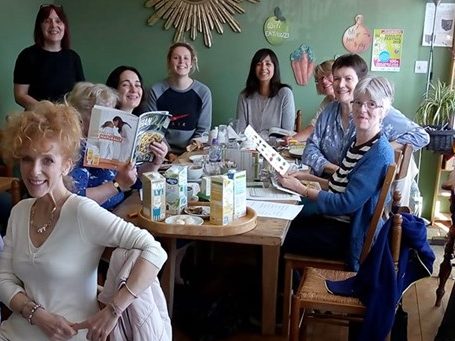
Want to talk with others about climate change, but you’re not quite sure how? We’ve got ready-made materials to help you. You gather a group of friends or colleagues, either on-line or in person. We provide all the materials you need to hold your own Climate Conversation. A Climate Conversation is a chance to take time to discuss the climate crisis, your thoughts for the future, and deciding what actions you could take. Whether it’s 2 hours over a drink with friends, or a couple of lunch-hours at work, why not start organising it today? All the materials you need to hold a ‘Climate Conversation’ with family or friends are easily available on our website, alongside FAQs.
DO: Invite a Climate Champ to your gathering: your club, book group, networking group or business lunch and learn. Our free-to-book volunteers are happy to support audiences to understand how they can take the action needed that works for them and their lives.